Last updated September 24, 2026
New windows and doors improve comfort, cut energy bills and add long-term value to your home. Sightline Windows & Doors South Miami Heights pairs proven product lines with our own installing crews for lasting performance - and a price we put in writing.
1. Choose your installer
The unit is half the job - the install is the other half. Our own background-checked crews measure, set, seal and insulate every opening, and they know the lines we quote inside and out because they install them every week.
2. Select the right products
Compare styles, materials and glass packages side by side until the fit is right for your rooms, your budget and your goals. The product-line comparison below is the place to start.
3. Prepare your home for install
Before install day we walk you through a short checklist - furniture pulled back, treatments down, a clear path to each opening - so install day is watch-it-happen, not scramble.
Compare the Lines We Quote
Every project is priced on the same lines, side by side - the price indicators below are relative, and your consultant shows exact numbers on your actual openings.
PGTThe line Florida homeowners arrive naming - the most Miami-Dade certifications in the industry$$$
- More Miami-Dade NOA certifications than any other line we quote
- WinGuard, EnergyVue and ClassicVue Max systems built for every wind zone
- 99% on-time delivery keeps your install date on the calendar
CGIThe heavyweight impact line$$$$$
- Large-missile impact ratings for the strictest wind zones
- Architectural-grade aluminum with commercial-depth frames
- The line we quote when protection is the whole point
CWSThe Florida value pick$$
- Vinyl systems built in Florida for Florida codes
- Strong energy packages at the friendliest price point
- The smart start for whole-home replacements on a budget
ESWSlim lines, big glass$$$$
- Narrow-sightline aluminum for modern elevations
- Oversized openings and floor-to-ceiling glass
- Impact-rated without the bunker look
ECOThe aluminum impact workhorse$$$
- Miami-built aluminum impact systems
- A strong price-to-protection ratio for coastal homes
- Proven inventory lines with short lead times
Windows & Doors Permits, Codes & Inspections in FL: What You Need to Know
Here’s the trap that catches South Miami Heights homeowners every hurricane season: a window can carry a Florida Product Approval number, pass every state test, and still fail a Miami-Dade County inspection if it lacks a separate Notice of Acceptance (NOA). These are parallel approval systems, not the same database with two names. In our experience across 18,000+ openings since 2012, the gap between state approval and county acceptance is where permits get rejected, jobs get delayed, and homeowners discover their new impact windows cannot legally be signed off. This guide explains both systems, who pulls the permit, what inspectors actually check, and what happens to your title and insurance when a permit stays open. For more guides & resources on protecting your home, explore our blog.
Quick Answer
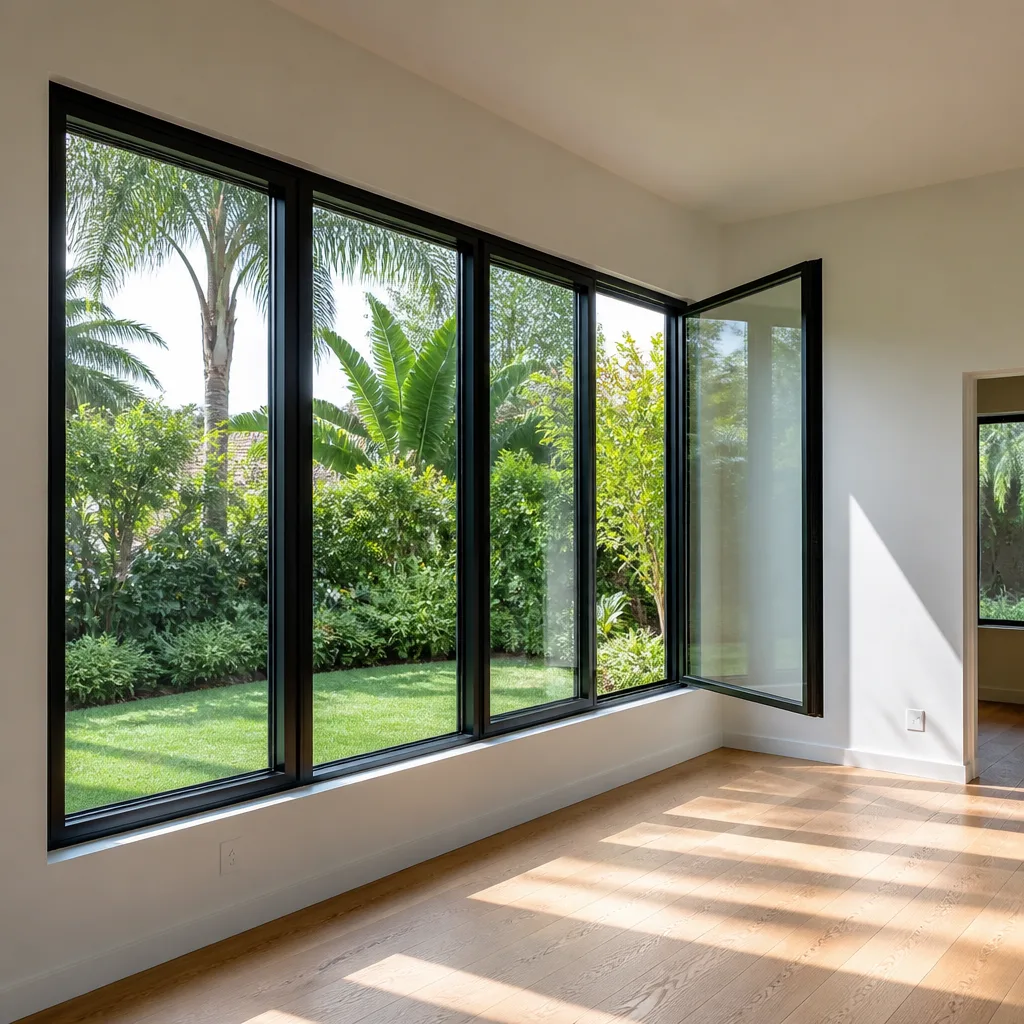
In Florida, window and door installations require a county building permit pulled by a licensed contractor or the homeowner. In South Miami Heights, which sits in Miami-Dade County’s High-Velocity Hurricane Zone, every product must carry both Florida Product Approval and a Miami-Dade NOA number. See our Complete Guide to Windows & Doors in South Miami Heights for a full overview. The inspection process has three stages: rough opening, installation, and final. Work without a closed permit can block home sales and void insurance claims.
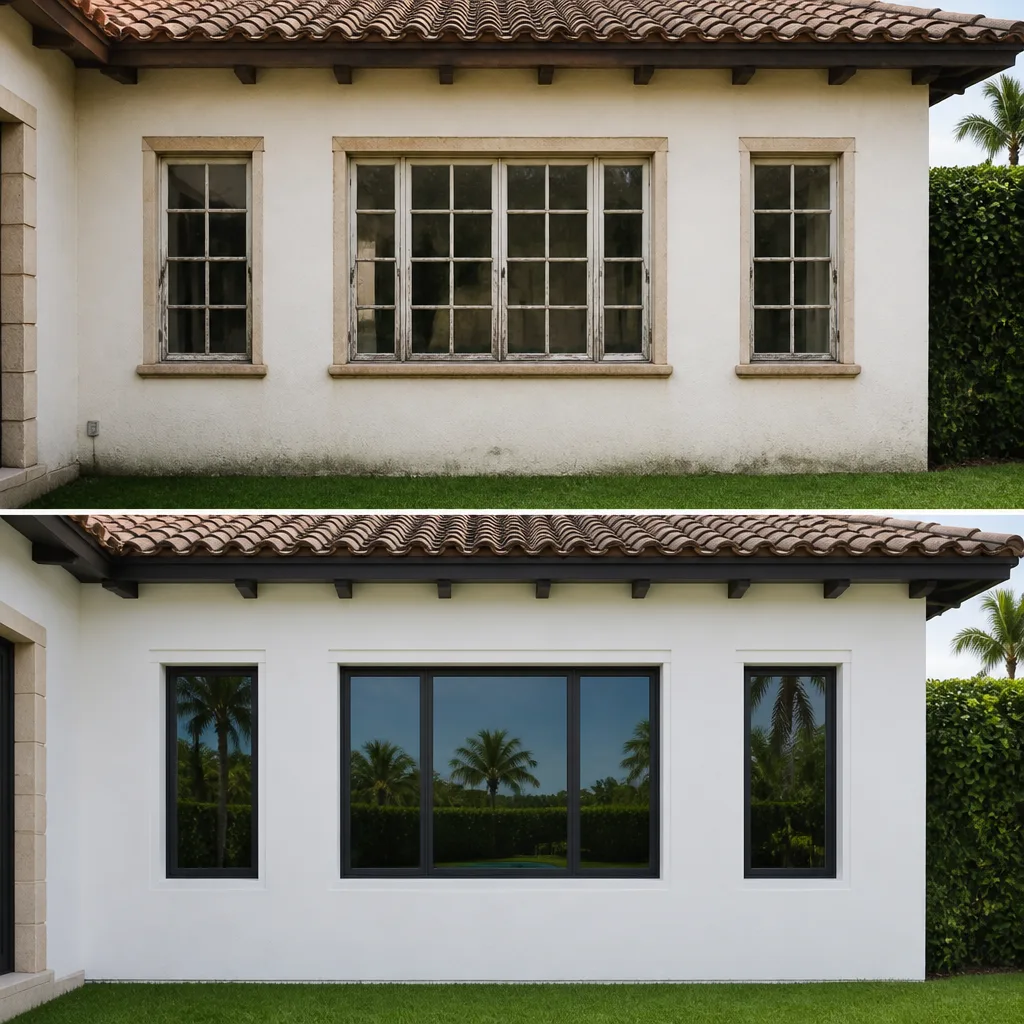
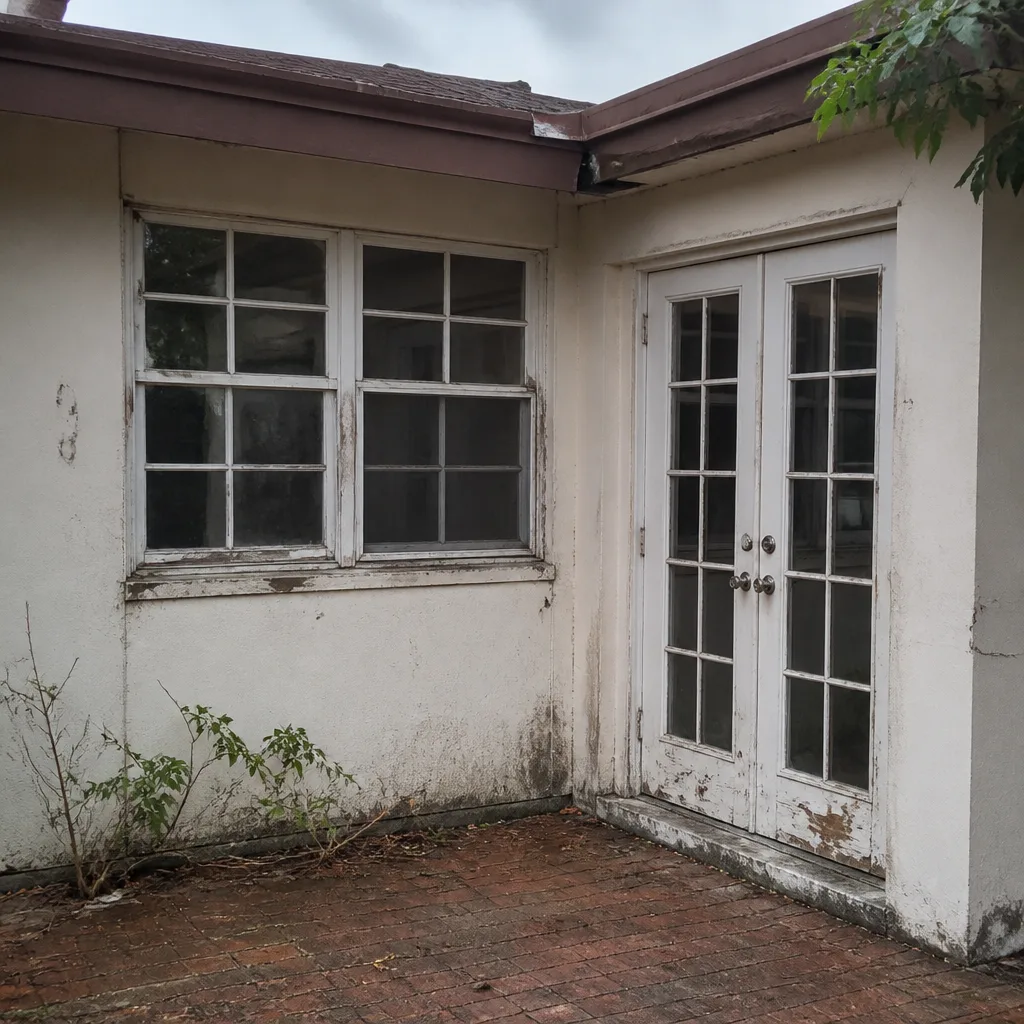 Before
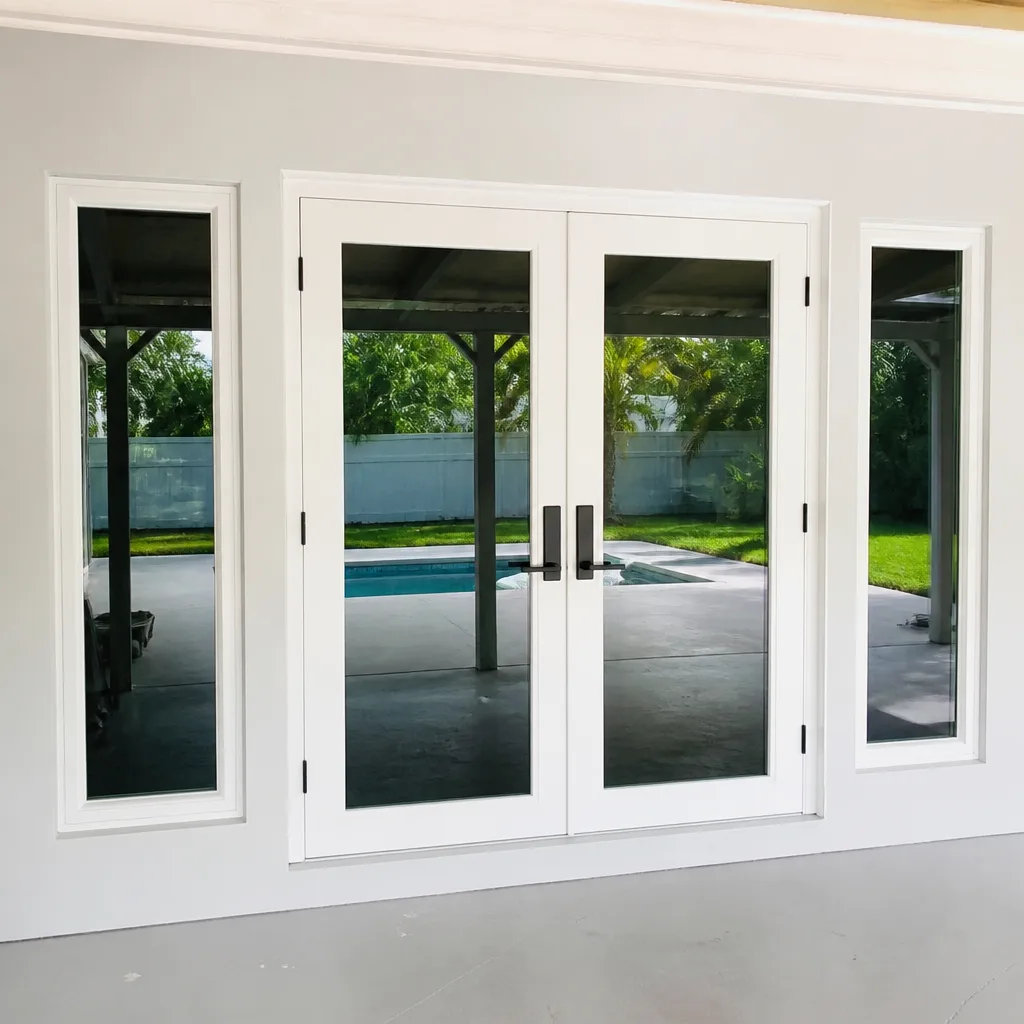 After
AfterTable of Contents
- Florida Product Approval vs. Miami-Dade NOA: Two Parallel Systems
- Who Pulls the Permit: Contractor or Homeowner
- High-Velocity Hurricane Zone: What Section 1620 Adds
- The Three Inspection Stages in Miami-Dade
- How to Look Up Both Approval Numbers for Any Product
- Insurance, Resale, and Open Permits: Documented Consequences
- Common Mistakes to Avoid
- When to Call a Professional
- Frequently Asked Questions
- The Bottom Line
Florida Product Approval vs. Miami-Dade NOA: Two Parallel Systems
Florida Product Approval is administered by the Florida Building Commission through floridabuilding.org. It certifies that a window or door meets statewide standards for wind load, water infiltration, and structural performance. A product with this approval can be installed in Orlando, Tampa, or Jacksonville without additional state-level certification.
Miami-Dade County operates its own product acceptance program through the Notice of Acceptance (NOA). An NOA is issued by the Miami-Dade County Regulatory and Economic Resources Department after products undergo testing specific to High-Velocity Hurricane Zone conditions. The county maintains its own database at miamidade.gov.
The critical distinction: Florida Product Approval does not automatically grant Miami-Dade NOA status. A manufacturer must submit separately, pay separate fees, and often modify the product to meet county-specific requirements. We have seen ES Windows products with strong Florida Product Approval numbers that required additional Miami-Dade testing before acceptance. The same applies to ECO Window Systems and Therma-Tru door assemblies.
For South Miami Heights homeowners, this means every product specification sheet must show two numbers: the Florida Product Approval number and the Miami-Dade NOA number. A contractor who shows only one is either uninformed or cutting a corner that will surface at inspection.
The practical consequence arrives at permit application. Miami-Dade’s online permit system flags products without valid NOAs. The application stops until the correct documentation is uploaded. In our experience, this delay averages 7 to 14 days if the contractor must source the NOA retroactively, and longer if the product was never submitted for county testing.
Who Pulls the Permit: Contractor or Homeowner
Florida law allows either the property owner or a licensed contractor to pull a building permit. The choice shifts legal liability in ways most homeowners do not anticipate.
When the contractor pulls the permit:
- The contractor becomes the “responsible party” on record with the county.
- The contractor’s license bond and insurance back the work.
- The contractor coordinates all inspections and correction notices.
- If the work fails inspection, the contractor bears the cost of rework and re-inspection fees.
When the homeowner pulls the permit:
- The homeowner becomes the responsible party, even if a contractor performs the work.
- The homeowner assumes liability for code compliance and inspection scheduling.
- If the contractor abandons the job, the homeowner must find another licensed contractor willing to assume responsibility for work they did not perform - a difficult position.
- Insurance carriers may question whether unpermitted work or failed inspections fall under standard homeowner coverage.
In South Miami Heights, we pull every permit for work we perform. Haven Clause 1 requires the written scope to match the permit application exactly. The measured survey we provide before work begins becomes the basis for the permit drawings. The written quote cannot differ from that document. This alignment protects the homeowner from the common scenario where a contractor’s verbal scope and the permitted scope diverge, leaving the homeowner responsible for work the county never approved.
Homeowners sometimes pull their own permits to save the contractor’s administrative fee, a choice explored in our DIY vs Professional Windows & Doors guide. In Miami-Dade, that fee typically runs $150 to $400 depending on project value. The savings disappear if an inspection fails and the homeowner must pay re-inspection fees, hire a new contractor to correct deficiencies, or - in the worst cases - remove and reinstall products that do not match the approved plans.
High-Velocity Hurricane Zone: What Section 1620 Adds

South Miami Heights lies within Miami-Dade County’s High-Velocity Hurricane Zone (HVHZ), designated under Section 1620 of the Florida Building Code. This classification triggers requirements that do not apply to standard Florida installations.
The HVHZ designation originates from wind-borne debris regions defined by ASCE 7. Miami-Dade requires all exterior openings - windows, doors, garage doors, skylights - to be impact-resistant or protected by approved shutters unless the opening faces an interior courtyard or similar protected space. This is not a recommendation. It is a structural requirement tied to the building envelope’s ability to maintain pressure during a hurricane event.
Specific HVHZ requirements include:
- Large missile impact testing (9-pound 2×4 lumber at 50 feet per second) for products within 30 feet of grade.
- Small missile impact testing for products above 30 feet.
- Cyclic pressure loading after impact to verify the assembly maintains structural integrity.
- Water infiltration resistance at pressures significantly higher than standard Florida requirements.
The Miami-Dade NOA specifies exact installation details that satisfy these tests: fastener type and spacing, frame attachment method, sealant specifications, and flashing integration. Deviating from the NOA installation detail voids the product’s acceptance for that application. We document every fastener pattern and sealant bead in the photo record we provide at job completion.
South Miami Heights homes built between 1950 and 1992 often have original windows that predate HVHZ requirements. Replacement triggers full current code compliance. A homeowner cannot replace a failed single-pane window with a modern non-impact window, even if the original was non-impact. The permit application will be denied, and an inspector who discovers an unpermitted non-compliant installation will issue a correction notice requiring removal.
Garage doors face particular scrutiny. Section 1620 requires garage doors in HVHZ to meet specific wind load ratings and impact standards. Mr-Glass impact garage doors carry Miami-Dade NOAs for this application, but the NOA specifies track hardware, jamb construction, and opener attachment details that must be followed precisely.
The Three Inspection Stages in Miami-Dade
Miami-Dade County requires three inspections for window and door replacements in the HVHZ. Each has specific physical checks that inspectors document with photographs uploaded to the county system.
Stage 1: Rough Opening Inspection
The inspector verifies the opening preparation before product installation. Physical checks include:
- Opening dimensions match the permitted plans within 1/4 inch.
- Structural framing is intact; no rotted studs, compromised headers, or insect damage.
- Flashing rough pan or sill pan is installed per the product NOA detail.
- Fastener blocking or reinforcement is present where required for the specified attachment method.
- Product labels and markings are on-site for verification against the permit application.
We schedule this inspection only after our technician photographs the prepared opening and confirms alignment with the measured survey. The photo record begins here.
Stage 2: Installation Inspection
The inspector examines the installed product with finishes incomplete. Physical checks include:
- Product model and dimensions match the NOA and permit.
- Fastener type, size, and spacing match the NOA installation detail exactly.
- Shim placement and fastening sequence follow manufacturer specifications.
- Sealant type and application match the NOA; common failure points are inadequate sealant thickness at the head and incomplete backer rod installation.
- Operable units function correctly; locks, latches, and hardware operate as specified.
This is where most failures occur. A fastener spaced at 8 inches when the NOA requires 6 inches is a fail. A sealant bead that misses the interior stop is a fail. The inspector does not judge intent; they measure against the document.
Stage 3: Final Inspection
The inspector verifies completion with finishes applied. Physical checks include:
- Interior and exterior trim covers fasteners without obstructing future access for maintenance.
- Weatherstripping is intact and continuous.
- Impact-resistant coverings or shutters, if required by the NOA, are installed and functional.
- Site is clean; no construction debris remains that would indicate incomplete work.
- All correction notices from prior inspections are cleared in the county system.
Only after Stage 3 does the county issue a Certificate of Completion. The permit status changes from “open” to “closed” in the public record. This closed status is what title companies verify during real estate transactions.
How to Look Up Both Approval Numbers for Any Product
Homeowners and contractors can verify both approval numbers independently. This verification takes approximately 10 minutes and prevents the most common permit rejection cause.
Step-by-Step: Florida Product Approval Lookup
- Navigate to floridabuilding.org and select “Product Approval” from the main menu.
- Choose “Search Product Approvals” and enter the manufacturer name (e.g., “PGT Industries” or “ES Windows”).
- Filter by product category: “Windows” or “Doors and Frames.”
- Locate the specific product model in the results list. The approval number format is FLXXXXX, where XXXXX is a sequential number.
- Click the approval number to view the PDF certificate. Verify the product description, dimensions, and performance ratings match your specification.
- Note the expiration date. Florida Product Approvals expire and must be renewed by the manufacturer.
Step-by-Step: Miami-Dade NOA Lookup
- Navigate to miamidade.gov and search “Notice of Acceptance” in the site search.
- Select the NOA database link, which redirects to the county’s product control search system.
- Enter the manufacturer name or the NOA number if known. NOA numbers for windows and doors typically format as NOAXX-XXXX.XX, where the suffix indicates revision level.
- Verify the product description matches the Florida Product Approval exactly. Some manufacturers have similar model names with different NOA status.
- Download the NOA PDF and locate the “Installation Instructions” section. This contains the fastener spacing, sealant specification, and structural attachment details that inspectors measure against.
- Confirm the NOA is current. Miami-Dade NOAs expire and require renewal; an expired NOA is equivalent to no NOA for permit purposes.
We perform this dual verification for every product in every South Miami Heights quote. The specification sheet we provide lists both numbers, and we retain PDF copies in the job file. If a homeowner brings us a competitor’s quote, our free second opinion includes this verification - we have found products specified with valid Florida Product Approval but expired or missing Miami-Dade NOAs.
Insurance, Resale, and Open Permits: Documented Consequences
The consequences of unpermitted or uninspected work extend beyond code compliance into financial and legal territory that homeowners discover too late.
Title and Resale Impact
Miami-Dade County maintains permit records in a public database searchable by property address. Title companies routinely query this database during sale preparation. An open permit - one where work was started but final inspection was never achieved - appears as a cloud on title. The standard Florida real estate contract (FR/BAR) requires seller disclosure of open permits.
In practice, this means:
- The seller must either close the permit before closing or escrow funds for estimated completion costs.
- Closing a permit years after installation often requires removing finishes to expose work for inspection, then reinstalling finishes - a cost that frequently exceeds the original installation price.
- Some title insurers will not insure a transaction with open permits until they are resolved.
- Cash buyers and investors may proceed, but they discount purchase price to account for permit resolution risk.
We have been called to South Miami Heights homes where a previous owner’s 2017 window replacement was never finaled. The current seller discovered the open permit during listing. Our documentation process - the measured survey, the written scope, the photo record - exists precisely to prevent this scenario. Every job we complete includes permit closure confirmation.
Insurance Claim Impact
Florida insurance carriers have increasingly denied or reduced hurricane damage claims where unpermitted work contributed to loss. The legal theory: unpermitted work may not meet code, and code-noncompliant construction is not entitled to replacement at code-compliant value.
Documented cases include:
- Denied claims where non-impact windows failed during a named storm and the carrier established the home was in HVHZ requiring impact products.
- Reduced settlements where improper installation (no permit, no inspection) contributed to water intrusion that caused interior damage.
- Policy non-renewal notices where inspection reveals unpermitted additions or envelope modifications.
The photo record we provide serves as evidence of proper installation if a claim arises. The closed permit number is referenced in the documentation packet. This is not theoretical protection - it is documentation that exists when an adjuster asks for it.
Property Tax Assessment
Miami-Dade’s Property Appraiser receives permit data and may adjust assessed value for permitted improvements. Unpermitted work does not trigger this adjustment, but discovery during sale or refinancing can lead to retroactive assessment and penalties. The risk is asymmetric: the homeowner gets no tax benefit during ownership but bears the compliance burden at transfer.
Common Mistakes to Avoid
- Accepting a contractor’s word that a product “meets Miami-Dade.” “Meets” is not “approved.” Ask for both the Florida Product Approval number and the Miami-Dade NOA number, then verify them yourself in both databases.
- Pulling the permit to save a small administrative fee. The liability shift is permanent and disproportionate to the savings. In South Miami Heights, a failed inspection with homeowner-pulled permits has cost clients thousands in rework and re-inspection fees.
- Installing non-impact windows in HVHZ based on outdated advice. Pre-2002 construction does not grandfather replacement windows. Current code applies to all replacements, and inspectors enforce it.
- Assuming Florida Product Approval implies Miami-Dade NOA. These are parallel systems. We have seen this assumption fail at inspection for products from major manufacturers with strong statewide presence.
- Neglecting to verify NOA expiration dates. Both Florida Product Approvals and Miami-Dade NOAs expire. A product approved when installed but expired at permit application will be rejected.
- Failing to obtain the Certificate of Completion. The permit is not closed until the county issues this document. Some contractors consider the job done at final inspection, but the public record remains open until the certificate issues.
- Using online permit status as the sole verification. Miami-Dade’s online system can lag actual status by several days. We obtain written confirmation from the inspector or permit technician before considering a job complete.
When to Call a Professional
Call a licensed contractor when the project involves structural opening modification, product specification in HVHZ, or any work where permit closure affects title or insurance. The cost of professional permit management is recoverable; the cost of failed inspections and open permits compounds.
Specific scenarios that warrant professional involvement: replacement of windows or doors in homes built before 2002, installation of impact-rated products where the original was non-impact, garage door replacement in HVHZ, any project where the homeowner has already pulled a permit and encountered an inspection failure, and preparation of a home for sale where permit history is unknown.
Window Installation in South Miami Heights and Door Installation in South Miami Heights through Sightline Windows & Doors South Miami Heights include full permit management, dual database verification, and documented closure. We offer free estimates in South Miami Heights - call (786) 481-0414 to schedule a measured survey.
Frequently Asked Questions
Permit fees in Miami-Dade are calculated as a percentage of project valuation, typically 1.5% to 2% for residential window and door work, with minimum fees around $150. A $15,000 window replacement project generates permit fees of approximately $225 to $300, plus plan review fees if engineering drawings are required. Call (786) 481-0414 for an exact quote on your specific scope - estimates are free.
Florida law allows homeowner-installed work, but Miami-Dade still requires permits and inspections for all exterior openings in HVHZ. The homeowner assumes full liability for code compliance, inspection scheduling, and correction of deficiencies. Most window and door manufacturers void product warranties for owner-installed work, and obtaining a Miami-Dade NOA-compliant installation without trade experience is uncommon. We recommend professional installation for all HVHZ work.
At Sightline Windows & Doors South Miami Heights, the written quote is fixed. Haven Clause 1 states that the measurement and the quote are the same document. If an inspection failure results from our error or omission, we correct it at our cost. This is written into our scope, not offered as a courtesy. The 365-Day Done Right Promise applies to all work under the Haven Standard.
With proper scheduling and no failures, the full sequence typically completes in 10 to 14 business days. Rough opening inspection usually occurs within 2 to 3 days of request. Installation inspection follows within 2 to 3 days of rough approval. Final inspection schedules within 3 to 5 days of installation approval. Re-inspections after failure add 5 to 7 days each. We coordinate all scheduling and include timeline estimates in our written scope.
Unpermitted windows in South Miami Heights create three problems: they cannot be verified as HVHZ-compliant for insurance purposes, they cloud title at sale, and they may trigger county enforcement if discovered. Remediation typically requires exposing the installation for inspector verification, which may involve interior and exterior finish removal. The cost often exceeds original installation. We provide free second opinions on scope and remediation approach - call (786) 481-0414.
Yes. We pull every permit for work we perform. The permit application is derived from the measured survey you keep, and the written scope matches the application exactly. Our technicians are background-checked, uniformed, and identified by license number before arrival. Every completed job includes a closed permit, Certificate of Completion, and documented photo record. This is standard under the Haven Standard, not an additional service.
The Bottom Line
Florida’s two-tier approval system - Florida Product Approval and Miami-Dade NOA - creates a compliance gap that traps unprepared homeowners. South Miami Heights properties in the High-Velocity Hurricane Zone must satisfy both systems, pass three inspection stages, and close permits completely to protect title transferability and insurance coverage. The verification takes minutes. The consequences of skipping it last years. Documentation at every stage - product approval numbers, permit applications, inspection results, and photo records - is the only reliable defense.
Call (786) 481-0414 to schedule your free estimate. Every quote includes dual database verification, a measured survey you keep, and a written scope that becomes the permit application. No surprises. No open permits. Evidence on every job.
Written by Sonia Raman, Owner at Sightline Windows & Doors South Miami Heights, serving South Miami Heights since 2012.
Six Reasons Homeowners Choose Sightline Windows & Doors South Miami Heights
Impact systems engineered to design pressures up to +/-100, matched to your wind zone - your openings hold when the storm arrives.
Low-E insulated impact glass from our manufacturer lines commonly cuts monthly cooling bills 20-30%.
Laminated impact glass shuts out up to 40% of outside noise - traffic, neighbors, weather.
Monitoring services run $30-90 a month. Laminated impact glass resists forced entry around the clock, with no subscription.
Florida homeowners average around 25% savings on the windstorm portion of their policy after protecting every opening - some homes qualify for more.
A full impact package upgrades curb appeal, buyer confidence and appraised value in one project.
Other Sightline Windows & Doors South Miami Heights Services
What Neighbors Say About Sightline Windows & Doors South Miami Heights